Course Director: Brian Milani <bmilani@web.ca> Office Hours: 4-5:15pm & 8:30-10pm Wednesdays or by appointment |
||||||
|
Schedule and [Note: Readings subject to change. Check each week.] Week 1, September 5,
Introduction: student introductions and statements
of interest, with an overview of key issues and relationships in green
business. ·
Brian Milani, “What is Green Economics?”,
Synthesis / Regeneration, #37 (Spring 2005); and Race, Poverty and the Environment:
A journal for social and environmental justice (2006) Video: Ray
Anderson: The Business Logic of Sustainability
Week 2, September 12, Perspectives on
Sustainability & Business ·
Eric Assadourian,
“When Good
Corporations Go Bad,” World Watch magazine, May/June 2005 ·
Gary Gardner and Thomas Prugh,
“Seeding the Sustainable Economy,” Chapter 1, The State of the World 2008, NY/Washington: Worldwatch
Institute, 2008 ·
Joel
Makower & editors of GreenBiz.com, The
State of Green Business 2012, skim pages 24-82 (and the
"trends" section pages 4-23, if you've got time) ·
Jonathan
Rowe and David Bollier, "The Missing Sector:
Enlarging our sense of 'the Economy'," On the Commons, October 24,
2010 ·
Bill McDonough & Michael Braungart, “The Next
Industrial Revolution,” Atlantic Monthly, Oct. 1998 ·
Walter Stahel, “From Products to
Services: Selling performance instead of goods,” ITPS Report, #37 Optional: ·
The Great
Transition, executive summary, New Economics
Foundation report, October 2009
Week 3,
September 19, The Corporation: Problems & Strategies · Jonathan
Rowe, “Is the
Corporation Obsolete?”, Washington Monthly, 2001 ·
Nelson Lichtenstein, “Wal-Mart: A Template for 21st Century
Capitalism?”, abridged version of introduction to Wal-Mart: The Face of
Twenty-First Century Capitalism (New Press,
November 2005) ·
Eric Assadurian, “The Role of
Stakeholders,” Worldwatch magazine, Sept./Oct.
2005 ·
John
H. Richardson, "Saving Capitalism
from Itself: Inside the B Corp Revolution," Esquire, August 23, 2010 ·
·
Majorie Kelly, Can
There be "Good" Corporations? When companies are owned by workers
and the community–instead of Wall St. financiers—everything changes, Yes!
magazine Spring 2012 ·
Susan Burns, "The
Natural Step: A compass for environmental management systems," Corporate
Environmental Strategy, #6 Optional: · William Young and Fiona Tilley, "Can
Businesses Move Beyond Efficiency? The Shift toward Effectiveness and Equity
in the Corporate Sustainability Debate," Business Strategy
and the Environment, 15,
402–415 (2006) ·
Jose
Antonio Campos Chaves, "The
Challenge of Making Corporate Sustainability Work: A framework to develop and
implement a corporate sustainability strategy," EnvironGrade
2009, slideshare ·
Frank Dixon, “Total Corporate Responsibility:
Making SRI and CSR sustainable,” GreenBiz,
April 2004. ·
Bob Doppelt, Overcoming
the Seven Sustainability Blunders, The
Systems Thinker, vol. 14 no. 5, 2003 ·
Robert Poiasek, Debunking
the Notion of a Triple Bottom Line,
GreenBiz, August 31, 2009 ·
Majorie Kelly, The Next Step for CSR: Economic Democracy,
Business Ethics, 2002 Videos: The Corporation: A Legal
'Person' The Corporation:
Externalities
Week 4,
September 26, Values-driven & Local Business
·
David Korten, "A New
Economy Policy Agenda," BALLE Policy Panel, May 23, 2009, livingeconomies.org ·
David Brodwin, "Americans
Leading a Do-It-Yourself Economy as Washington Stalls," US News
website, August 2, 2012 ·
Rachel Mendelson, "Canadian
B-Corps Put their Money Where Their Branding is on Social Causes," Huffington Post.ca, March 2012 ·
John Talberth, “A New Bottom
Line for Progress,” Chapter 2, The
State of the World 2008, NY/Washington: Worldwatch Institute, 2008 ·
Stacy
Mitchell, "Independent
Businesses Deliver Bigger Economic Benefit, Study Finds," ILSR
website, August 16, 2012 Optional: ·
Kirk Johnson, "Small
Farmers Creating a New Business Model as Agriculture Goes Local,"
New York Times, July 1, 2012 ·
Carl Frankel, "The
Lore of the Local: Q & A with Michael Shuman," Chronogram
Magazine, Feb. 27, 2009 ·
Josh Harkinson, "Profits
of Place: A different vision of success emerges along Main St.,"
Orion magazine, Jan/Feb. 2004 ·
Herman Daly, “Globalism
and Its Discontents,” August 2000 ·
Stacy Mitchell, “Keep Your
Eyes on the Size: The impossibility of a green Wal-Mart,” Grist, March
28, 2007 Videos:
The Multiplier Effect:
Keeping Austin Weird Zingerman's: This is Ownership Michael
Shuman on Local Economic Development culture break: sing-a-long celebration of
Big Box stores recommended: Is
Wal-Mart Good for America? PBS.org
Week 5, October 3, Green Manufacturing
& Energy ·
Keith Parkins, “Soft Energy Paths”,
Gaia briefing paper. ·
Walter R. Stahel, “The
Utilization-Focused Service Economy: Resource Efficiency and Product-Life
Extension,” The Greening of Industrial Ecosystems, ·
David Morris, “The
Once and Future Carbohydrate Economy,” The American Prospect, March 19,
2006 · John Farrell, Maximizing
Jobs From Clean Energy: Ontario's 'Buy Local' Policy, ILSR report,
executive summary, January 2011 · Ben Block, North
American Feed-in Tariff Policies Take Off, Worldwatch
Institute website, 2011 ·
Ed Cohen-Rosenthal,
“What is
Eco-industrial Development?”, chapter 1 of Eco-industrial Strategies: Unleashing Synergy between Economic Development and the
Environment, ·
Helen Lewis and
John Gertsakis, Introduction:
Design + Environment: A global guide to designing greener goods,
Greenleaf Publishers, 2001 Optional: ·
Robert Poulin & Heidi Garrett-Peltier,
Building
the Green Economy: Employment effects of green energy investments for Ontario,
report for Green Energy Act Alliance, Blue-Green Canada & WWF, 2009 ·
The
Great Green Technological Transformation, World Economic and Social Survey 2011, UN Dept. of
Economic and Social Affairs. ·
Work in a Warming World,
York U. website
Videos: ·
Jeremy Rifkin on
the 3rd Industrial Revolution ·
David Morris on energy
self-reliant states ·
Barrack Obama
talks about Local Motors ·
Amory Lovins on Reinventing Fire
Week 6, October 10, Regulation ·
Michael Marx and Marjorie
Kelly, “Who Will
Rule?” Yes! magazine, Fall 2007 · Neil Gunningham and Darren
Sinclair, “Regulatory
Pluralism: Designing Policy Mixes for Environmental Protection”, Law and
Policy 21, 49-76, 1997 · Brian Milani, “Mindful Markets, Value
Revolution and the Green Economy: EPR, Certification and the New Regulation” ·
Michael Braungart,
"Product Life-Cycle
Management to Replace Waste Management", in Socolow, Andrews, Berkhout
& Thomas (eds.), Industrial Ecology
and Global Change, N.Y./Cambridge: ·
Brian Dunkiel, M. Jeff Hamond,
and Jim Motavalli, “Sharing the Wealth:
If We Shift the Tax Burden From Work to Waste, Everyone Benefits”, E
magazine, March/April 1999 ·
Alex Goldmark, "The
Benefit Corporation: Can business be about more than profit?" , Good
Business website, July 1, 2011 Optional: ·
Walter Stahel, "The
Virtuous Circle? Sustainable Economics and Taxation in a Time of Austerity,"
A Chartered Insurance Institute "thinkpiece",
October 2011 ·
Michael E. Conroy, Certification Systems as Tools for Natural
Asset Building: Potential, Experience to Date, and Critical Challenges, Working paper No. 100, Political Economy Research Institute
(PERI), University of Massachusetts-Amherst, July 2005 (skim) · “EPR: A
Prescription for Clean Production, Pollution Prevention and Zero Waste”,
Grassroots Recycling Network, August 2003 · Brenda Platt, Local Inititatives Leverage EPR, ILSR Waste to Wealth
report, Nov. 2000 ·
Barry Commoner, “Pollution
Prevention: The Source of an Ethical Foundation for Sustainable Development”, 1990 ·
Google Books,
excerpts: Norman Myers and Jennifer Kent, Perverse
Subsidies: How Tax Dollars Can Undercut the Environment and the Economy, Island Press, 2001
Week 7, October 17, Financing Green ·
Eugene Ellmen, "Socially
Responsible Investing in Canada," Green Money Journal, August/Sept. 2008 ·
David Korten, "When Bankers Rule the World: How we can call
out the myths, restructure the banking system, shut down the con game, and
take back America,"
Yes! magazine, March 2012 ·
Stacy Mitchell,
"Banking for
the Rest of Us," Sojourners magazine, April 1, 2012 ·
Bill Baue ·
Michael Shuman,
"Put
Your Money Where Your Life Is: Americans want to invest locally. What's stopping them?,"
Yes! Summer 2009 ·
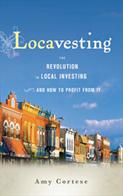
Amy Cortese, "In
Defence of Crowdfunding," Locavesting blog, March 16, 2012 ·
Jessica Freireich, Investing
for Social and Environmental Impact: A design for catalyzing an entire industry,
Executive Summary of report for the Monitor Institute, Jan. 2009 ·
Paul Weinberg,
"Self-financing
Toronto: City could ease cash crisis if it put revenues in a bank of its own,"
Straight Goods, May 14, 2012 ·
Chandra Pasma and Jim Mulvale, Income
Security for All Canadians: Understanding Guaranteed Income, BIEN Canada
study, 2011 Optional: · John Bellamy Foster and Hannah Holleman,
"The
Financial Power Elite," Monthly Review, vol. 62, issue 1, May 2010 ·
David Korten, "How to Liberate America from Wall Street
Rule," Introduction
to report from The New Economy Working Group ·
Rebecca Leisher, "Watch
Us Move Our Millions: Cities, churches and colleges take steps to move their
money home," Yes! magazine,
Spring 2012 ·
Peter Boone and Simon Johnson, "The
Canadian Banking Fallacy," The Baseline Scenario, March 25, 2010 · Ellen Russell, "Should
Canadians Worry about a Banking Crisis?", Toronto Star, June 23,
2012 · Ellen Russell, No More Swimming Naked: The need for
modesty in Canadian banking, Canadian Centre for Policy Alternatives
report, June 2012 · John Bellamy Foster, The
Financialization of Capitalism, Monthly Review
58, 11 (April 2007); reprinted as chapter 4 of Foster and Magdoff's
The Great
Financial Crisis: Causes and consequences, NY: Monthly Review
Press, 2009 · Les Leopold, "How
Wall Street Thieves, Led by Goldman Sachs, Took Down the Global Economy,"
Alternet, April 25, 2011 · Wuppertal Institute, Micro-finance
and Renewable Energy Investing in a Sustainable Future
Videos: Money,
Power & Wall St., PBS Frontline, April/May 2012 Michael Shuman speaks to CoopPower Finance Summit, July 14, 2012
Week 8, October 24, Social Justice &
Community Enterprise
(Even more) Optional: ·
John Cartwright, Green Jobs are the Future,
background paper, Toronto Good Jobs for
All conference, Nov. 2008 ·
Michael Renner,
"Making the Green Economy Work for Everybody,"
chapter 1 of The State of the World 2012. · Winona LaDuke, "Local Energy, Local Power," Yes! magazine, Winter 2007 ·
Bernard Marszalek, "Green-collar
Jobs, Industrial Policy, and Society with a Future," New Labor
Forum, Fall 2008 ·
Emily Badger,
"What
Shade of Green Best Suits the Economy?", Miller-McCune Research,
Jan. 22, 2009 ·
Green-Collar
Jobs in America's Cities: Building Pathways out of poverty and careers in the
clean energy economy, report for
Apollo Alliance & Green for All, March 2008 ·
James Trimarco and Jill Bamberg, "Worker
Co-ops: Green and just jobs you can own," Yes! Summer 2009 ·
Philip Mattera et al, High
Road or Low Road? Job quality in the new green economy, report for Good
Jobs First, February 2009 ·
Adele M. Stan,
"Big
Business's Hidden Hand in the Smear Job on Van Jones," AlterNet,
Sept. 8, 2009 Links: ·
Good Jobs for All Coalition, Toronto ·
Jane-Finch
Community and Family Centre green change centre
[
here's a great film for reading week:
RiP: A Remix
Manifesto ] Week 9, November 7, Commons & Creativity in the Network
Economy Readings: ·
Jay Walljasper, "What is the
Commons?", chapter 1 of All
That We Share: A field guide to the Commons, New York: The New Press,
2010 ·
Yochai Benkler, A
Moment of Opportunity and Challenge, Chapter 1 of The Wealth of Networks: How Social Production Transforms Markets and
Freedom, ·
James Boyle, "A
Manifesto on WIPO and the Future of Intellectual Property," Duke Law and Technology Review, August 2004
·
Don Tapscott and Anthony D. Williams, Introduction and
Chapter One “Wikinomics: The Art & Science of
Peer-Production,” from Wikinomics: How Mass
Collaboration Changes Everything (Portfolio/Penguin, 2006) ·
David Morris,
"Why
is Multi-Billion-Dollar Telecom Time Warner fretting over a small city in
North Carolina?", Alternet, June 27, 2011 ·
Diana LInd, policy brief: "Information and Communications
Technologies Creating Livable, Equitable, Sustainable Cities,"
summary of chapter in State of the World 2012. ATTENTION: also watch what you can of this film before class: RiP: A Remix Manifesto Optional : ·
Verdantix, Cloud
Computing: The IT Solution for the 21st Century, study for Carbon
Disclosure Project, 2011 ·
Laurence Lessig, “Some Like It
Hot: Piracy & culture,” Wired magazine, Issue 12.03 (March 2004) ·
·
Clay Shirky, "Does
the Internet Make You Smarter?", Wall St. Journal, June 4, 2010 ·
"Weblogs and the
Mass Amateurization of Publishing," blog,
Oct. 3, 2002 ·
Michael Geist, "Supreme
Court Shakes Foundations of Copyright Law," Toronto Star, July 15,
2012 ·
Michael Geist, "Controversial
copyright Rules Threaten Canada-European Trade Deal," Toronto Star,
July 7, 2012 ·
Christine
Smillie-Adjarkwa, Is the
Internet A Useful Resource For Indigenous Women Living In Remote Communities
In Canada, Australia and New Zealand To Access Health Resources?,
Paper researched and written for the Summer Student Internship Program
2005,National Network for Aboriginal Mental Health Research ·
Toward Equality of
Access: The Role of Public Libraries in Addressing the Digital Divide, report for Bill and Melinda Gates
Foundation ·
Stan Cox, "War, Murder,
Rape...All for your cell phone," AlterNet, Sept. 14, 2006 ·
Scott Thill, "Google: Good or
Evil when it comes to the Environment?," AlterNet, July 3, 2008
Week 10, November 14, Consumption, Markets & Marketing
Chip
Conley & Eric Freidenwald-Fishman, "Why Marketing Matters," Introduction from Marketing
That Matters, San Francisco: Berrett-Kohler
Publishers, 2006 Jacquelyn Ottman,
Consumers
With a Conscience, chapter 2 of Green Marketing: Opportunity for Innovation,
New York: NTC-McGraw-Hill,
1998 Optional: --Gary Gardner and Erik Assadourian,
“Rethinking the Good Life”, Chapter 8, from
the State of the World 2004, NY/Washington: Worldwatch
Institute, 2004 --Aseem Prakash, "Green Marketing,
Public Policy and Managerial Strategies," Business Strategy and the Environment, 11,
285-297 (2002) --Tim
Jackson, Tim Jackson, "The Challenge of Sustainable Lifestyles,"
chapter 4 of The State of the World 2008, NY/Washington: Worldwatch
Institute, 2008 --book
description and excerpts: Sharing
the Work, Sparing the Planet: Work time, consumption and ecology, by
Anders Hayden, MES 1997 --David Morris, “Is Eating Local the Best Choice?”,
AlterNet, --Stan Cox, “War, Murder, Rape…All for your
cell phone,” AlterNet, --Green Marketing News,
Greenbiz.com Forbidden: (video) Ø George
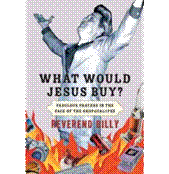
Carlin on The American Dream Ø Rev. Billy, The
Week 11, November 21, Presentations Aaron; Nitika; Durriya & Andrea; Anne; Antonio; Estelle
Week 12, November 28, Presentations [Tentative] Kimia; Sylvia; Brent; Adrienne; Mariana; Alli; Sabrina; Jamai [ Papers: approximately 15 pages, double-spaced, on a topic of your choice; due date TBA (usually about 10 days after last class) Book Review: of any relevant book; on the course biblio or not, about 5 pages double-spaced, due week 9. Presentations: individuals (12 min.) or teams of 2 (20 min.) on a topic of your choice, Grades: Attendance/Participation 10%; Review 10%; Presentation 15%; Term paper 65%.
|
||||||
|
|
||||||